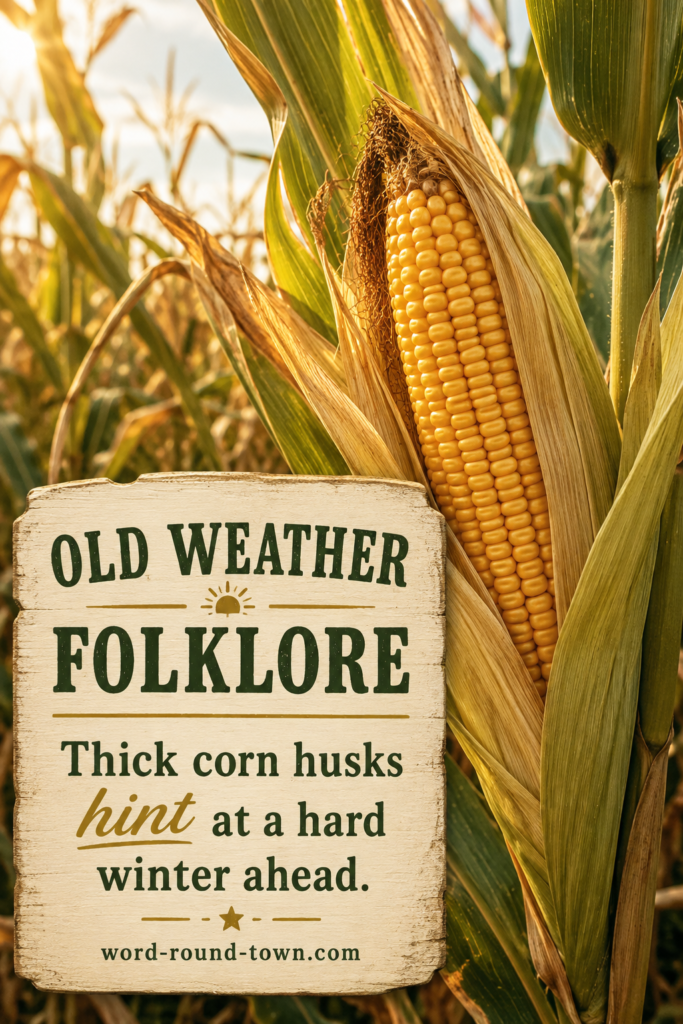
The Old Folklore Hidden Beneath the Husk
Older generations did not have weather apps, satellite maps, or seasonal computer models.
They watched the sky.
They noticed the animals.
And sometimes, they peeled back the husk of an ear of corn.
According to a long-standing piece of weather folklore, unusually thick or tightly wrapped corn husks were believed to signal that a long, cold, or snowy winter was on its way.
The idea was simple: if the corn appeared to be wearing a heavier coat, perhaps people should prepare to do the same.
There is something undeniably charming about that thought.
After all, generations of farmers learned to pay close attention to the natural world around them. They noticed changing winds, cloud formations, animal behavior, crop conditions, and countless other details that many people now pass without seeing.
But can a corn husk truly predict winter?
Modern science says not reliably.
Corn husks develop during the growing season and can vary because of plant genetics, weather conditions, moisture, heat, disease pressure, and other factors affecting the crop itself. They are not known to form extra layers in anticipation of a winter that has not yet arrived.
Still, the old saying remains part of America’s rich collection of weather lore.
Alongside woolly bear caterpillars, busy squirrels, heavy acorn crops, and halos around the moon, thick corn husks continue to inspire conversations about what winter may bring.
Perhaps the value of the tradition is not whether it forecasts the snow correctly.
Perhaps it is the way it reminds us to slow down, look closely, and listen to the fields.
So, the next time you peel back an ear of late-summer corn, take a look at the husk.
Just do not put away the snow shovel~ or buy a new one~ based on the corn alone.
Have you noticed especially thick corn husks in your part of Iowa this year? And what winter-weather signs did your parents or grandparents believe in?
Keep Goin’ ‘Round Town
There’s always another story waiting just around the corner.